


pet care center, Pet hair removal
The Ultimate Guide to Pet Hair Removal (2026)
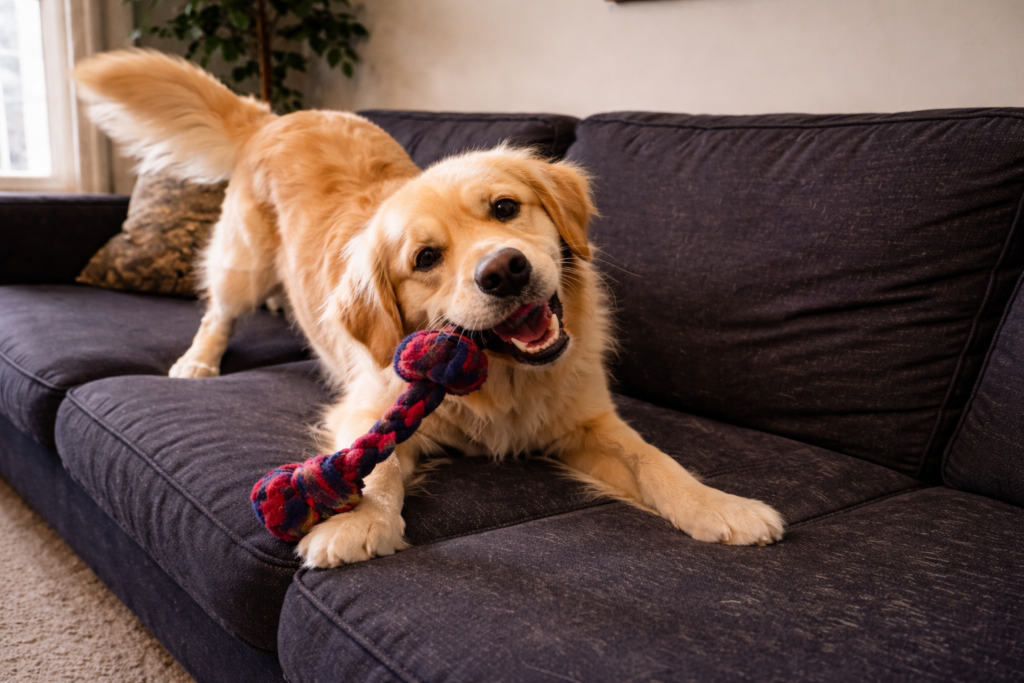
The best pet hair removal method depends on where the hair has landed. For furniture and clothing, a reusable pet hair brush works faster than a lint roller. For the washing machine, hair catchers in the drum catch loose hair before it can redistribute across other items. For heavy-shedding breeds, a regular deshedding routine reduces the amount of hair reaching your furniture and clothing in the first place.
This guide covers every method, surface, and scenario, with honest comparisons to help you pick the right tool for your situation.
What is the best pet hair remover?
There is no single best pet hair remover. The right choice depends on the surface, the breed, and the volume of hair. That said, the most versatile single product is a reusable pet hair brush: it works on furniture, clothing, car seats, and bedding, and replaces disposable lint rollers indefinitely.
Here is how the main tool categories compare:
| Tool type | Best for | Recommended Fur Magic product |
|---|---|---|
| Pet hair brush | Furniture, clothing, car seats, stairs, any fabric surface | Fur Magic Brush |
| Reusable roller | Smooth upholstery, quick daily touch-ups | Fur Magic Reusable Roller |
| Laundry bag | Preventing hair spreading in the washing machine drum | Fur Magic Pet Laundry Bag |
| Hair catchers | Catching loose hair in the drum during any wash cycle | Hair Catcher 2-Pack / 4-Pack |
| Deshedding tool | Reducing loose undercoat in heavy-shedding or double-coated breeds | Deshedding & Dematting Tool/ Wooden Deshedding Tool |
If you can only buy one product, the Fur Magic Brush is the most versatile. It removes hair from almost any fabric surface, and replaces endless disposable lint rollers. If you have a heavy-shedding breed, add a deshedding tool to your routine to tackle the problem at source.
How do I remove pet hair from furniture and upholstery?
For sofas, armchairs, and car seats, a pet hair brush is faster and more effective than a vacuum alone. The key is a tool with directional bristles or a rubber surface that creates static lift, pulling embedded hair out of woven fabric rather than pushing it further in.
Step-by-step: removing pet hair from a sofa
- Dry-brush first: Remove cushions. Working in one direction, brush the sofa surface firmly with short strokes. Hair will ball up as you go.
- Collect the hair: Ball the loose hair by hand and discard. The Fur Magic Brush is self-cleaning and there are no adhesive sheets to replace.
- For stubborn embedded hair: Use the Fur Magic Lint Remover and Fuzz Shaver and wipe in one direction. This lifts hair that bristles miss.
- Final pass: The Fur Magic Lint Remover and Fuzz Shaver or Scraper Brush is ideal for getting hair out of hard to reach places.
Furniture hair removal: tool comparison
| Method | Speed | Effectiveness | Best for |
|---|---|---|---|
| Fur Magic Brush | Fast (1–2 min) | Excellent. Lifts embedded hair | All fabric surfaces, reusable |
| Vacuum (standard) | Moderate | Good for loose surface hair | Carpets and hard floors |
| Vacuum (pet nozzle) | Slow | Best for deeply embedded carpet hair | Carpets with heavy soiling |
| Lint roller (disposable) | Fast | Moderate. Surface hair only | Smooth upholstery, clothing touch-ups |
| Rubber glove / damp hand | Slow | Good for stubborn embedded hair | Finishing pass on tight-woven fabric |
What removes pet hair better: a vacuum or a brush?
For surface hair on sofas, chairs, and clothing, a pet hair brush is faster and more convenient than a vacuum. For carpets and deeply embedded hair, a vacuum with a motorised pet attachment beats a brush. The best approach for most households is both: use the brush for daily quick passes on fabric surfaces, and the vacuum for a thorough weekly clean of floors and carpets.
The Fur Magic Brush works on the same principle as a vacuum’s rubber nozzle, i.e. static friction lifts hair from fibres, but without the bulk or cord. For a whole-house clean, use both tools together rather than choosing one over the other.
How do you get dog hair out of clothes?
Dog hair on clothing is a two-stage problem: hair picked up before or after washing, and hair that makes it into the wash drum and redistributes onto other items. Both need different solutions.
Before and after the wash: use a brush or roller
A quick pass with the Fur Magic Brush removes visible hair from jumpers, trousers, and jackets in under 30 seconds. It is faster than a lint roller and does not use disposable sheets.
In the wash: use hair catchers
Hair that enters the washing machine drum distributes across every item in the load. The Fur Magic Hair Catcher 2-Pack or 4-Pack sit inside the drum and catch loose hair before it can redeposit on clothing. Run a rinse-only cycle with hair catchers after any heavily contaminated wash to clear the drum.
Quick Reference for Clothes Hair Removal
| Stage | Method | Product |
|---|---|---|
| Before washing | Brush clothing with a pet hair brush | Fur Magic Brush |
| In the wash | Use a laundry bag for hairy items and hair catchers in the drum | Fur Magic Pet Laundry Bag / Hair Catcher 2-Pack / 4-Pack |
| After washing | Quick brush pass to remove any remaining hair | Fur Magic Brush |
| Daily maintenance | 2-minute daily brush of sofas and pet contact areas | Fur Magic Brush |
How do I stop pet hair from covering everything?
You cannot stop a shedding dog from shedding, but you can manage where hair ends up by working at three levels simultaneously. First, reduce shedding at the source through regular grooming, then intercept hair during washing, and finally remove surface hair daily before it transfers to clothing.
The three-layer system
| Layer | Goal | Recommended product |
|---|---|---|
| 1. Reduce at source | Remove loose undercoat before it falls | Deshedding & Dematting Tool / Wooden Deshedding Tool |
| 2. Intercept in the wash | Prevent hair spreading in the drum | Hair Catcher 2-Pack / 4-Pack |
| 3. Daily surface removal | Stop hair building up on furniture and clothing | Fur Magic Brush |
Layer 1: Reduce hair at the source
Regular deshedding removes loose undercoat before it falls naturally. Dogs that are brushed 2–3 times per week shed significantly less than ungroomed dogs of the same breed. Use a dedicated deshedding tool (not a standard slicker brush) for double-coated breeds. The Fur Magic Deshedding & Dematting Tool handles both deshedding and knot removal. The Wooden Deshedding Tool is a good option for dogs that need a firmer touch.
Layer 2: Intercept hair in the wash
Any fabric your dog contacts, such as blankets, bedding, your clothing, should be washed in a Fur Magic Pet Laundry Bag with Fur Magic Hair Catchers (available in a 2-pack and 4-pack) in the drum to catch loose hair before it redistributes. Run a rinse-only cycle with hair catchers after heavily contaminated washes to clear the drum.
Layer 3: Daily surface removal
A 2-minute daily pass with the Fur Magic Brush on sofas, chairs, and any fabric surface your dog uses stops hair building to the point where it transfers to clothing. It takes less time to remove daily accumulation than a week’s worth of embedded hair.
How often should I groom my dog to reduce shedding?
Grooming frequency depends on coat type and shed volume. As a general rule, double-coated and heavy-shedding breeds need brushing 3–4 times per week with a deshedding tool, while short-coated or light-shedding breeds can be maintained with weekly brushing using a standard slicker or rubber brush.
During seasonal coat blows (typically March–April and September–October), increase grooming sessions by 50% and consider a professional groom. A well-maintained undercoat sheds in concentrated sessions rather than continuously throughout the year.
Full guide: How to Choose a Deshedding Tool for Your Dog
What deshedding tools do vets recommend?
Vets generally recommend tools that remove loose undercoat without cutting or damaging the guard hairs. For double-coated breeds, an undercoat rake or deshedding comb is the preferred choice. Slicker brushes are better for tangles and surface coat maintenance. Rubber brushes suit short-coated breeds during bath time.
Vet-aligned principles for deshedding
- Match the tool to the coat. A deshedding comb is for dogs with a dense undercoat, not short-coated breeds.
- Never use a deshedding tool on a wet coat, always groom dry.
- Limit sessions to 10–20 minutes for active deshedding tools to avoid coat stress.
- Stop if you see redness, bald patches, or skin irritation. Consult a vet or groomer.
- An annual professional groom (including a blow-out) does more for shedding volume than daily home brushing alone.
Fur Magic’s Deshedding & Dematting Comb covers both functions; the deshedding side removes undercoat, while the dematting teeth work through knots without pulling. The Wooden Deshedding Tool offers a firmer alternative for dogs with particularly dense undercoats.
→ See full comparison: Best Deshedding Tools for Dogs (2026 Guide)
Frequently asked questions
Q1: Does pet hair cause problems in the washing machine?
Yes. Pet hair can block washing machine filters, clog drain pumps, and stick to other items in the load. Using a laundry bag with hair catchers in the drum prevents most of this. Run a rinse-only cycle with hair catchers after heavily contaminated washes to clear residual hair from the drum and drum seals.
Q2: What is the best way to remove pet hair from a car?
A pet hair brush or rubber squeegee works well on car fabric seats and boot liners. Work in one direction to ball up hair before vacuuming. For seat covers, remove and brush before washing with hair catchers in the drum. The Fur Magic Brush is compact enough to keep in the car for quick passes between journeys.
Q3: Can I use a lint roller on all fabrics?
Lint rollers are safe on most fabrics but can snag delicate wool, silk, or loosely woven items. For delicate pieces, use a fabric brush or gently brush by hand. A reusable brush is gentler than adhesive rollers for regular use and does not require replacement sheets.
Q4: Does brushing a dog reduce shedding in the house?
Yes, significantly. Regular brushing removes loose undercoat before it falls naturally. Dogs brushed 3–4 times per week typically shed noticeably less loose hair around the home compared to ungroomed dogs of the same breed. The effect is most pronounced in double-coated and heavy-shedding breeds.
Q5: What is the difference between a deshedding tool and a regular brush?
A regular brush detangles and smooths the top coat. A deshedding tool has finer, closer-set teeth designed to reach the dense undercoat and pull out loose, dead hair from deeper in the coat. Using a regular brush on a double-coated breed smooths the surface but leaves the undercoat largely untouched.
Q6: How do I remove pet hair from bedding?
Shake bedding outdoors first to dislodge loose hair. Tumble dry on low heat for 10 minutes before washing; the motion loosens embedded hair and the lint trap catches it. Wash with a laundry bag and hair catchers in the drum to prevent hair redistributing. Use the Fur Magic Brush on bedding between washes.
Q7: Is the Fur Magic Brush suitable for cats as well as dogs?
Yes. The Fur Magic Brush works on hair from any pet on any fabric surface. It has been tested on cat and dog hair alike on sofas, clothing, and car seats.
Q8: How often should I replace a reusable pet hair brush?
A quality reusable brush like the Fur Magic Brush should last years with proper care. The self-cleaning base can be opened and cleaned occasionally with a microfibre cloth. Store away from direct sunlight. Replace if bristles flatten permanently or the base structure becomes compromised.